Ten of Swords: Endings, Release, and the Dawn After Defeat
The Ten of Swords is the final card of the Suit of Swords. It represents painful endings, rock bottom, and the moment when something has finished and cannot be revived. It is a dramatic card, but it is not a doom card. The worst has already happened, and what remains is recovery.
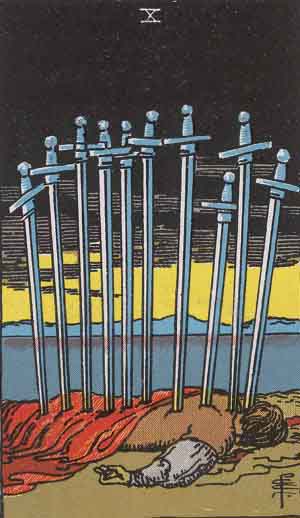
In the Rider-Waite-Smith deck, a figure lies face down on the ground with ten swords across their back. The sky is black, the water is still, and a band of golden light shines along the horizon. The scene is brutal, yet nothing more can be done to this person, and the sun is rising.
The image carries the card's central lesson: you can't be hurt any further, so the only way forward is up. If you're new to tarot, our Tarot Card Meanings guide and Suit of Swords guide explain how this card fits the wider deck. As the tenth card of its suit, it shows the Swords cycle at its end point, where the mind's struggles reach their conclusion.
The Ten of Swords at a Glance
Ten of Swords at a glance
| Detail | Meaning |
|---|---|
| Card | Ten of Swords |
| Number | 10 |
| Arcana | Minor Arcana |
| Suit | Swords |
| Element | Air |
| Astrological association | Sun in Gemini (Golden Dawn system) |
| Core themes | Endings, betrayal, collapse, exhaustion, release, new beginnings |
| Upright | Painful ending, rock bottom, betrayal, surrender, finality |
| Reversed | Recovery, slow healing, refusing to let go, repeating old pain |
The Ten of Swords Tarot Card History
Swords is one of the four original suits of the 15th-century European card decks, and in Italian and Spanish decks it was drawn as real swords. Early numbered cards (pip cards) usually showed ten swords arranged in a pattern, with no scene or story.
Tarot began as a card game, and its use for divination came later, mostly in the 18th and 19th centuries. The dramatic Ten of Swords we know today comes largely from the Rider-Waite-Smith deck of 1909, devised by Arthur Edward Waite and illustrated by Pamela Colman Smith. Smith gave the minor cards full scenes, and her image of the fallen figure set the pattern for most modern versions. Some historians believe the earlier Sola Busca deck influenced these scenic pip cards.
The Symbolism of the Ten of Swords
The Figure Lying Face Down
The person on the ground shows total defeat, with no fight left and nothing left to protect. Their face is hidden, which suggests pain too deep to look at. It also shows surrender, since resistance has ended and rest can finally begin.
The Ten Swords
Ten swords is far more than anyone needs to cause harm. This suggests overkill: mental torment that has gone too far, or a situation that kept getting worse until it could not continue. The swords also stand for thoughts, words, and beliefs that have piled up over time.
The Black Sky
The darkness over the figure represents the lowest and bleakest time. It's the night when hope feels impossible. The sky also shows that the sorrow is real and shouldn't be hurried past.
The Golden Dawn
The glowing band on the horizon is the heart of the card. It says the night is ending and light is already arriving. Hope is present even when the figure can't see it.
The Calm Water and Distant Mountains
The still water shows that the storm has passed. Behind it, the mountains stand for the long road ahead, a recovery that will take time but is possible.
The Red Cloth
The small red cloth at the figure's waist is often read as the last trace of life and vitality. Even in defeat, something living remains.
The Ten in Tarot
The number ten closes a cycle. After the Ace begins something, the Ten brings it to its full and final point. In Swords, that final point is the end of mental struggle, whether through exhaustion, collapse, or release. The Ten does not say a story is over for good. It says this chapter has ended and a new one can begin, and in numerology every Ten returns to a new One.
What the Upright Ten of Swords Means
The upright Ten of Swords is a painful but necessary ending. It can come after a long period of anxiety, overthinking, or holding on to something that was already failing. The tenth sword is the final blow, and in a strange way it can feel like relief, because the uncertainty is over.
The Ten of Swords can come up when you are:
- - Facing the end of a relationship, job, or plan
- - Feeling betrayed or let down
- - Reaching burnout or total exhaustion
- - Hitting rock bottom
- - Letting go of an old identity or belief
- - Finally accepting that something is over
- - Ready to stop fighting a battle you can't win
The main message is that there is nothing left to defend, so you can stop. Grieve honestly, accept the ending, and let the new day begin in its own time.
How to Interpret the Ten of Swords Reversed
The reversed Ten of Swords shows recovery beginning. The worst is behind you, and you are slowly pulling the swords out. Healing may be gradual and uneven, but it is real.
The reversed card can also mean:
- - Refusing to accept an ending
- - Replaying old pain or old arguments
- - Dramatizing suffering to avoid moving on
- - Clinging to a victim identity
- - Repeating a destructive pattern
- - Recovering without fully processing what happened
The reversed Ten asks: "Are you healing, or are you holding on to the wound?" Sometimes the answer is that you need more time. Sometimes it is that you are ready to rise.
Ten of Swords Keywords
Upright: Endings, rock bottom, betrayal, collapse, defeat, exhaustion, finality, release, surrender, new beginnings.
Reversed Keywords: Recovery, Slow healing, Resisting the end, Self-pity, Repeating patterns, Survival, Lingering pain, Refusing to let go, Rising again
The Ten of Swords Romance and Love
In love readings, the Ten of Swords often signals a breakup, a painful ending, or the death of an illusion. If you're single, it can mean you are finally leaving behind an old heartbreak or a pattern of choosing the wrong people. It rarely suggests a new romance on its own, but it clears space for one.
In a relationship, the Ten can mean a betrayal, a final argument, or a relationship that has already ended in all but name. It may also show that you've been hurting for a long time and that continuing would only cause more harm. The card asks you to be honest about what is truly finished.
Love and the Reversed Ten of Swords
Reversed in love, the Ten of Swords suggests slow healing after heartbreak. You may be recovering and starting to trust again. It can also warn that you are stuck in an ended relationship, still hoping for a different outcome, or replaying old wounds. Give yourself permission to move on.
Feelings of the Ten of Swords
As someone's feelings, the Ten of Swords can mean they feel exhausted, hurt, or defeated by the situation. They may feel the connection is over or has caused too much pain. They may also be in the middle of grief and not yet ready to express it. The feelings are heavy, and they may need time and space.
Intentions: The Ten of Swords
As intentions, the Ten of Swords suggests the person wants a clear end. They may be ready to walk away, or they feel there is nothing left to try. In some readings it can also signal someone who has already given up. If reversed, the intentions are unclear, and they may be struggling to let go or to move forward.
Ten of Swords: Work & Career
The Ten of Swords is a dramatic card for career questions. It may point to:
- - A layoff, firing, or sudden loss of a position
- - A failed project or business
- - Burnout and complete exhaustion
- - Feeling betrayed by colleagues or leadership
- - The end of a career path
- - A toxic workplace finally coming to an end
- - A need to start over in a new direction
The card tells you that this ending is not a verdict on your worth. Take time to recover, then rebuild with what you've learned.
The Ten of Swords in Careers (Reversed)
Reversed, the Ten suggests you are recovering from a work setback. A new opportunity may be on its way, though you may still be processing what happened. It can also warn that you are clinging to a failing job, project, or goal. Be honest about whether staying is helping or just prolonging the pain.
The Ten of Swords and Wealth
In financial readings, the Ten of Swords points to a serious setback or loss. It can show debt, bankruptcy, a failed investment, or a collapse of financial plans. The worst may already have happened, so the most useful step is to face the numbers honestly.
Reversed, it can suggest:
- - Slow financial recovery
- - Climbing out of debt
- - Learning from a past money mistake
- - Fear of rebuilding
- - Holding on to a failing financial plan
In money readings, the Ten of Swords says the bottom has been reached and the climb can begin.
Ten of Swords: Yes or No
The Ten of Swords is usually a no for yes-or-no questions, especially if the question is about:
- - Saving a failing relationship
- - Reviving a plan that has collapsed
- - Success in a situation that is already ending
- - Avoiding a painful outcome
The no is not cruel. It says the situation has run its course. Reversed, the answer may soften to "not yet" or "it's getting better," particularly when the question is about recovery.
The Ten of Swords Guidance
When the Ten of Swords is your advice card, the message is clear: let it end. Stop fighting what is already over. Allow yourself to grieve, rest, and ask for help. You do not have to rebuild right away.
Be gentle with yourself. The card doesn't ask you to pretend the pain isn't real, but it also doesn't want you to live there. The dawn is already breaking, and recovery begins with letting yourself rest.
The Ten of Swords in Different Spread Positions
Ten of Swords in the Past
You have been through a painful ending, and its effects may still shape your present. It can also mean you've already survived the worst.
Ten of Swords in the Present
You are at a breaking point or in the final stage of something. Stop pushing, accept what is happening, and look after yourself.
Ten of Swords in the Future
An ending is approaching, possibly a hard one. It can also mean that relief is coming after a long struggle.
The Challenge of the Ten of Swords
The challenge may be accepting that something is truly over, or resisting the urge to stay in the role of victim. You may also need to ask for support.
Outcome: The Ten of Swords
This usually points to a complete ending followed by a fresh start. The outcome may be painful, but it clears the way for something better.
Ten of Swords Meaning and Element
The Ten of Swords is associated with Air, the element of thought, communication, and perception. Air is quick and invisible, which suits a suit of mental struggles. In the Golden Dawn system, the card is linked to the Sun in Gemini, a pairing that echoes the sunrise in the image. Tarot correspondences vary by tradition and deck, so treat the element as a suggestion rather than a rule.
The Meaning of the Ten of Swords on a Deeper Spiritual Level
Spiritually, the Ten of Swords is about the death of the ego and of old stories. It marks the moment when the beliefs and identities you've been defending finally collapse. This can feel like devastation, but it is also a form of liberation.
The card also teaches that suffering has an end point. Once you stop fighting and let go, a deeper peace becomes possible. The Ten invites you to meet endings with honesty and trust that the light on the horizon is real.
Tarot Card: Ten of Swords
When the Ten of Swords shows up, ask yourself:
- - What have I been holding on to that is already over?
- - Which thoughts are keeping me from seeing the sunrise?
- - What am I ready to stop carrying?
- - Who can support me while I recover?
- - Am I healing, or am I replaying the pain?
The Ten is especially powerful alongside cards of transformation or hope. Always read it in relation to your question and the surrounding cards.
Wondering what the Ten of Swords means for your situation? Try our Free Online Tarot Reading to see how it fits in with the rest of your spread.
The Ten of Swords and Other Cards
- Ten of Swords and Death: A deep, necessary transformation
- Ten of Swords and The Tower: Sudden collapse followed by clearing
- Ten of Swords and The Sun: Recovery and joy after hardship
- Ten of Swords and The Star: Hope and healing after rock bottom
- Ten of Swords and Nine of Swords: The end of a long cycle of anxiety and sleepless nights
See the rest of the suit in our Guide to the Suit of Swords.
Ten of Swords Tarot Card Keywords
Upright: Endings, rock bottom, betrayal, collapse, defeat, exhaustion, finality, release, surrender, new beginnings.
Reversed: Recovery, slow healing, resisting the end, self-pity, repeating patterns, survival, lingering pain, refusing to let go, rising again.
The Ten of Swords Tarot Card Meaning: What to Take Away
The Ten of Swords is the card of endings, rock bottom, and the first light after darkness. It reminds you that some things must end completely before something new can begin, and that the lowest point is also the turning point.
When the Ten shows up, ask yourself what you need to let go of, what you are ready to grieve, and who can help you heal. Meet the ending honestly, rest, and trust the dawn.
See what the Ten of Swords means in your own spread with a free online tarot reading, or learn more on our Suit of Swords page.
Explore the Other Swords Cards
Each card in the Suit of Swords marks its own stage, from the Ace to the King.
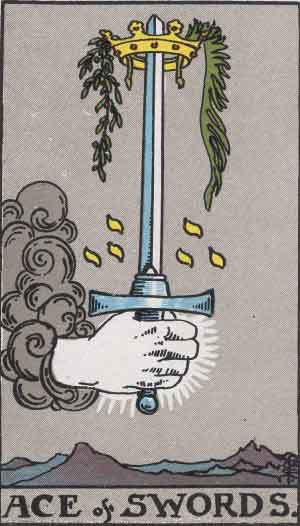 Ace of Swords
Swords · Ace
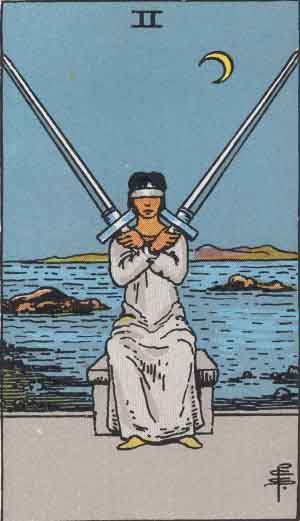 Two of Swords
Swords · Two
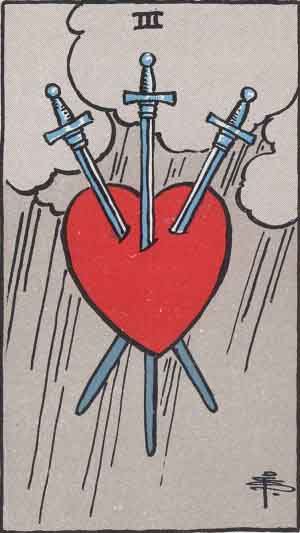 Three of Swords
Swords · Three
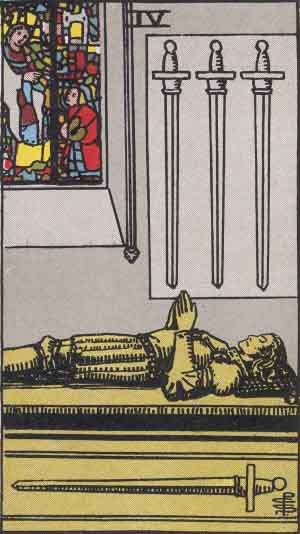 Four of Swords
Swords · Four
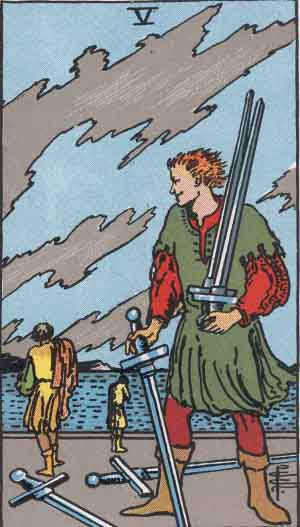 Five of Swords
Swords · Five
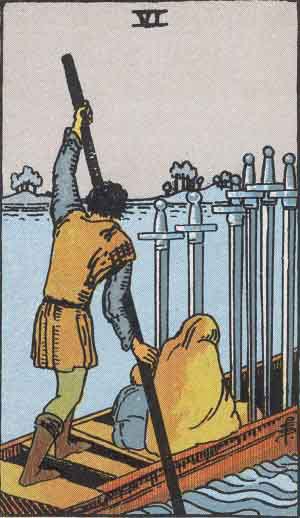 Six of Swords
Swords · Six
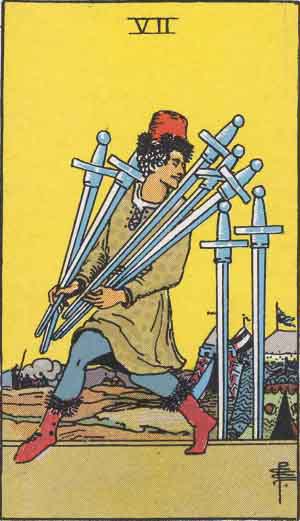 Seven of Swords
Swords · Seven
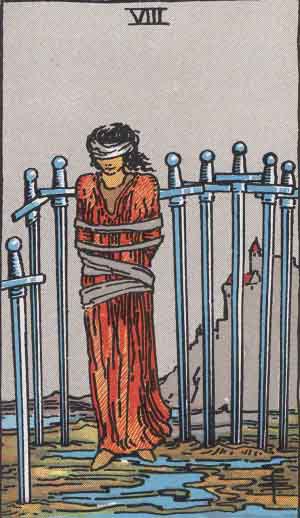 Eight of Swords
Swords · Eight
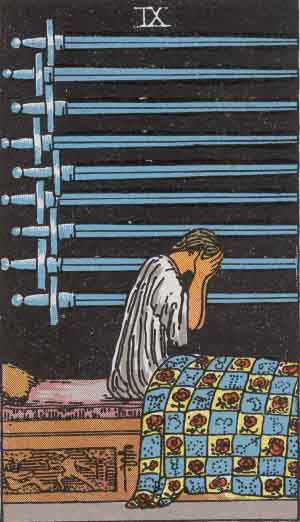 Nine of Swords
Swords · Nine
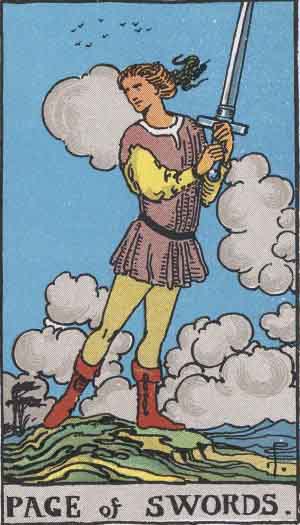 Page of Swords
Swords · Page
 Knight of Swords
Swords · Knight
 Queen of Swords
Swords · Queen
 King of Swords
Swords · King
Frequently Asked Questions
Is the Ten of Swords a bad card?
It looks frightening, but it is more hopeful than it seems. It shows the worst has passed, and the sunrise in the image points to a new beginning.
What does the Ten of Swords mean in love?
In love, it means a painful ending such as a breakup or betrayal, or the collapse of an illusion. It also clears space for healing and a fresh start.
What does the Ten of Swords reversed mean?
Reversed, it signals recovery, slow healing, or a refusal to let go. It can also warn of repeating old patterns or dwelling on past pain.
Ten of Swords Yes/No?
Usually no, especially for questions about saving something that has already ended. Reversed, it can mean "not yet" or "things are improving."
Ten of Swords meaning as feelings
It can show that someone feels exhausted, hurt, or defeated. They may be grieving and not ready to talk about it.
What does the Ten of Swords mean as intentions?
It suggests the person wants a clear end or has already given up. Reversed, their intentions may be unclear or they may be struggling to let go.
What does the Ten of Swords mean in career readings?
It points to a layoff, failed project, burnout, or the end of a career path. It also suggests that a fresh start is possible.
What is the element of the Ten of Swords?
Air, the element of thought, communication, and perception.
What does the Ten of Swords mean in the future position?
An ending may be coming, or relief after a long struggle. Either way, it points to a new beginning afterward.
What does the Ten of Swords symbolize spiritually?
It is about the death of the ego, letting go of old beliefs, and finding peace by surrendering what can no longer be held