
Five of Swords: Conflict, Defeat, and the Cost of Winning
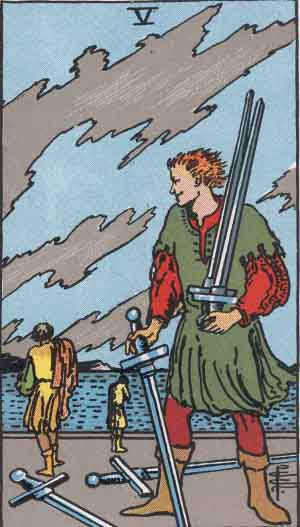
The Five of Swords is the fifth card of the Suit of Swords and represents conflict, tension, defeat, and hollow victory. After the rest of the Four, this card throws you back into the fray. It is the moment a disagreement turns into a battle, where winning matters more than the relationship, the truth, or the cost. It is a card of rivalry, pride, and the question of whether a fight is worth fighting.
In the Rider-Waite-Smith deck, a smirking figure in the foreground gathers three swords, holding one over his shoulder. Two other figures walk away toward the sea in the background, shoulders slumped, their swords left on the ground. The sky is grey and streaked with turbulent clouds, and the water is choppy.
The image carries one of the main themes of the Five: a victory can still be a loss. You may win the argument and lose the connection, the trust, or your peace of mind.
If you are new to tarot, read our Tarot Card Meanings guide and our Suit of Swords guide to see how this card fits into the wider system. As the number five, this card carries the energy of disruption and change, which in Swords shows up as conflict and tension.
The Five of Swords at a Glance
Five of Swords at a glance
| Detail | Meaning |
|---|---|
| Card | Five of Swords |
| Number | 5 |
| Arcana | Minor Arcana |
| Suit | Swords |
| Element | Air |
| Astrological association | Venus in Aquarius in the Golden Dawn system |
| Core themes | Conflict, defeat, tension, winning at a cost, pride, betrayal |
| Upright | Conflict, hollow victory, aggression, selfishness, humiliation, bullying |
| Reversed | Reconciliation, regret, letting go of a fight, making peace, lingering resentment |
Five of Swords Tarot Card History
Swords are one of the four suits of early European card decks of the 15th century. In older Italian and Spanish decks, the number cards showed only the swords themselves, arranged in simple patterns. The Five of Swords would have been five blades, with no victor, no defeated figures, and no stormy shore.
Tarot began as a card game, and its use for divination developed later, mostly in the 18th and 19th centuries. As tarot became part of esoteric traditions, the Five of Swords was linked to Venus in Aquarius in the Golden Dawn system. Venus is the planet of love and harmony, and Aquarius is an Air sign tied to ideas and detachment. This pairing is often read as harmony disturbed, which fits a card about conflict that damages relationships.
The image most readers know today comes from the Rider-Waite-Smith deck of 1909, created by Arthur Edward Waite and illustrated by Pamela Colman Smith. Smith's scene of a victor and his departing opponents turned a simple number card into a story about pride, power, and loss, and it shaped nearly every modern version of the card.
Symbolism of the Five of Swords
The Victor in the Foreground
The figure who holds the swords looks pleased with himself, yet his expression is more smug than joyful. He has won, but there is no one to celebrate with. His victory is lonely and perhaps unearned, and it raises the question of what he has actually gained.
The Swords on the Ground
Two swords lie on the ground, either surrendered or discarded. They show that the other side has given up, perhaps out of exhaustion or because they saw no point in continuing. They also suggest that not every fight needs to be fought.
The Departing Figures
The two figures walk away with their backs turned and their heads low. They represent defeat, sorrow, or choosing to leave a conflict rather than keep fighting. They can also be read as people wisely walking away from something that was not worth their energy.
The Stormy Sky
The grey, ragged clouds show tension and unrest. The atmosphere of the card is uneasy, and even the winner is surrounded by turbulence. Conflict leaves its mark on everyone involved.
The Choppy Sea
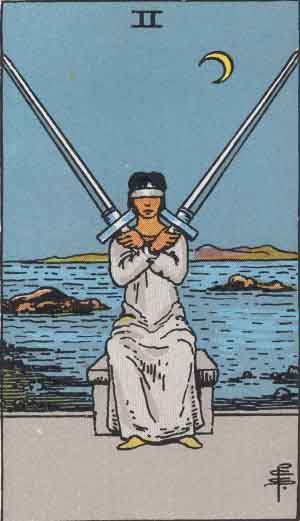
The restless water reflects emotions stirred up by conflict. Unlike the calm sea of the Two of Swords, it shows that feelings are now in motion and can no longer be ignored.
The Distant Shore
The land beyond the water suggests that there is a place beyond the conflict. It hints that peace is possible for those willing to leave the fight behind.
The Number Five
Five is the number of change, challenge, and instability. It is the midpoint of the suit, where harmony of the earlier numbers gives way to tension. In Swords, the Five shows the mind in combat, whether with others or with itself. It asks you to consider what a conflict is truly about, and what you are willing to lose to win it.
The Upright Five of Swords Meaning
The upright Five of Swords usually signals conflict, rivalry, or a win that comes at a high price. You may be in an argument, a competition, or a power struggle where the focus has shifted from solving a problem to defeating someone. It can also show that you are on the losing end of such a situation.
The Five of Swords may appear when you are:
- - Caught in an argument or power struggle
- - Winning at the expense of others
- - Feeling humiliated or defeated
- - Dealing with someone who is aggressive or manipulative
- - Struggling with pride or ego
- - Choosing to walk away from a fight
- - Facing a rivalry or competition
- - Realising a battle is not worth the cost
The key lesson is that not every fight deserves your energy. Sometimes walking away is the strongest choice. The card asks you to consider what you truly want from the situation, whether that is to be right, or to find peace.
The Five of Swords Reversed Interpretation
Reversed, the Five of Swords often points to the end of a conflict. You may be ready to reconcile, apologise, or let go of resentment. It can show that the fighting has worn itself out and a path to peace is opening.
The reversed card can also suggest:
- - Reconciliation and making amends
- - Regret over past behaviour
- - Letting go of a grudge
- - Resentment that has not been resolved
- - Continuing a fight out of pride
- - Walking away from a toxic situation
- - Lingering tension after an argument
- - Being bullied or backed into a corner
The reversed Five asks: are you ready to put down your sword, or are you holding on because you can't bear to lose? Peace often requires humility. Letting go of the need to win can be a victory of its own.
Keywords for the Five of Swords Reversed
- Reconciliation
- Regret
- Letting go
- Making peace
- Resentment
- Forgiveness
- Walking away
- Lingering tension
- Apology
- Ending conflict
The Five of Swords in Love & Romance
In love readings, the Five of Swords often points to conflict or a power struggle. If you are single, it may suggest that past arguments or competitive attitudes are getting in the way of connection. It can also warn of dating situations that involve games, rivalry, or a partner who needs to be right.
If you are in a relationship, the Five can show arguments in which both people are more focused on winning than listening. Hurtful words may be exchanged, and trust can erode when each person digs in. The card asks whether the relationship is being damaged by pride. A good question is: would you rather be right, or be close? In some cases, it can also signal a relationship that is unhealthy or one-sided, where one person consistently dominates.
The Five of Swords in Love Reversed
Reversed, the Five of Swords in love often shows reconciliation after a fight. One or both partners may be ready to apologise, forgive, or find a compromise. It can also suggest the end of a toxic cycle. On the other hand, it may show that resentment is lingering beneath the surface, or that you are avoiding an honest conversation. Take time to address the real issue, not just the argument.
The Five of Swords as Feelings
As someone's feelings, the Five of Swords suggests defensiveness, frustration, or competitiveness. They may feel threatened or on guard, or be struggling with pride. It can also show that they are hurt and lashing out. The card is not usually a sign of calm, open affection. It may indicate that conflict is clouding their ability to connect.
The Five of Swords as Intentions
When asking about someone's intentions, the Five of Swords can suggest they are more focused on winning or protecting themselves than on cooperating. In some cases, it can point to manipulation or self-interest. Pay attention to how they behave during disagreements. Reversed, it may suggest they are ready to make peace, or that they regret their earlier actions.
The Five of Swords in Work & Career
The Five of Swords in a career reading often points to workplace conflict, competition, or unhealthy tension. It can indicate:
- - Office politics or rivalry
- - Arguments with colleagues or management
- - A toxic or aggressive work environment
- - Taking credit for others' work
- - Losing out in a competition or promotion
- - Winning a negotiation at the cost of goodwill
- - Bullying or intimidation
- - Choosing to leave a hostile situation
The card advises you to pick your battles wisely. Think about the long-term impact of a conflict, including your reputation and relationships. Sometimes the best response is to set a boundary, document the situation, or walk away.
The Five of Swords in Career (Reversed)
Reversed, the Five of Swords can show an end to workplace conflict, a resolution, or a willingness to compromise. It may also point to lingering resentment, or to a conflict that has been smoothed over but not truly resolved. It can suggest that you are leaving a hostile environment or choosing to rebuild bridges. Reflect on what you have learned, and aim for solutions rather than victories.
The Five of Swords in Money
In financial readings, the Five of Swords can indicate disputes over money, unfair dealings, or a win that comes at a cost. It might point to a financial argument with a partner, family member, or business associate. It can also show a situation where you gain money but lose trust or goodwill.
When reversed, it can mean:
- - Settling a financial dispute
- - Regret over a money decision
- - Letting go of a financial grudge
- - Lingering resentment over money
- - Learning from a costly mistake
The card encourages you to think about long-term consequences. A short-term gain that damages relationships or your integrity may not be worth it.
The Five of Swords: Yes or No
For a yes or no question, the Five of Swords is generally a "no." It suggests that the situation may involve conflict, loss, or a victory that comes at a high price. It is not necessarily a prediction of failure, but a warning that the path may be costly.
The card is more likely to point toward "no" when the question involves:
- - Resolving a conflict smoothly
- - Winning without consequences
- - Maintaining harmony
- - Trusting someone's intentions
If the card is reversed, the answer may shift toward "yes," especially if the question is about making peace or ending a conflict. Be honest about what you are willing to give up to get there.
The Five of Swords Advice
When the Five of Swords is the advice card, the message is to pick your battles. Ask yourself whether the fight is worth the cost. Consider what you want from the situation: to be right, or to be at peace.
Listen as well as speak. Try to understand the other side, even if you disagree. If a situation is toxic, walking away may be the wisest move. Remember that true strength is not always about winning. It is about knowing what matters.
The Five of Swords in Different Spread Positions
The Five of Swords in the Past
You may have experienced a conflict, a defeat, or a time when you won at a cost. The effects of that experience may still be shaping your present.
The Five of Swords in the Present
You are in the middle of a conflict or tension. It may be time to ask what you are fighting for, and whether it is worth it.
The Five of Swords in the Future
A disagreement or competition may be ahead. It can be a reminder to prepare, stay calm, and choose your responses carefully.
The Five of Swords as a Challenge
The challenge may be letting go of pride, resisting the urge to win at all costs, or dealing with someone who is aggressive.
The Five of Swords as an Outcome
The situation may end in conflict or a hollow victory, but it can also lead to understanding if you choose peace over pride.
The Five of Swords and Its Elemental Correspondence
The Five of Swords is linked with Air, the element of thought and communication. In many systems, it is also connected to Venus in Aquarius. Venus relates to harmony and relationships, while Aquarius is an Air sign associated with ideas and independence. Together they reflect the card's theme of disrupted harmony and the cost of conflict. Tarot correspondences vary between traditions and decks, so treat them as guides rather than fixed rules.
The Deeper Spiritual Meaning of the Five of Swords
Spiritually, the Five of Swords is about the ego and its need to win. It asks you to look at the part of yourself that clings to being right, and to consider what that costs your peace. The card teaches that true victory is not found in dominance, but in wisdom and compassion.
It also reminds us that letting go can be powerful. Walking away from a pointless fight preserves your energy and integrity. The Five of Swords invites you to choose your battles with care, and to remember that some of the greatest wins are those where no one has to lose.
Tarot Reading: Five of Swords
When the Five of Swords appears, reflect on these questions:
- - What conflict are you facing, and what is it really about?
- - Is winning worth the cost to you?
- - Are you acting out of pride or fear?
- - What would peace look like in this situation?
- - Is it time to walk away?
The Five is especially meaningful alongside cards that signal justice, healing, or change. Always read it in context with the question and the surrounding cards.
Want to know what the Five of Swords means for your own situation? Try our Free Online Tarot Reading and see how it connects with the rest of your spread.
The Five of Swords and Other Cards
- Five of Swords and Justice: A conflict that calls for fairness and truth
- Five of Swords and The Tower: A dramatic clash or sudden fallout
- Five of Swords and Temperance: Finding balance and compromise after a dispute
- Five of Swords and The Chariot: A competitive drive, or winning through determination
- Five of Swords and Strength: Handling conflict with calm and compassion
Explore the rest of the suit in our Suit of Swords guide.
Five of Swords Tarot Card Keywords
Upright:
- Conflict, defeat, tension, hollow victory, aggression, pride, rivalry, betrayal, selfishness, humiliation
- Reversed:
Reconciliation, regret, letting go, making peace, resentment, forgiveness, walking away, lingering tension, apology, ending conflict.
Conclusion: Key Takeaway from the Five of Swords
The Five of Swords is the card of conflict, pride, and the cost of winning. It reminds you that not every battle is worth fighting, and that a victory that costs you your peace or your relationships may not be a victory at all.
When the Five appears, ask yourself what you are fighting for, what you stand to lose, and whether there is a better way forward. Sometimes the wisest move is to set down the sword and walk away.
Learn more in our Suit of Swords guide, or try a free online tarot reading to see what the Five of Swords means in your own spread.
Explore the Other Swords Cards
Each card in the Suit of Swords marks its own stage, from the Ace to the King.
 Ace of Swords
Swords · Ace
 Two of Swords
Swords · Two
 Three of Swords
Swords · Three
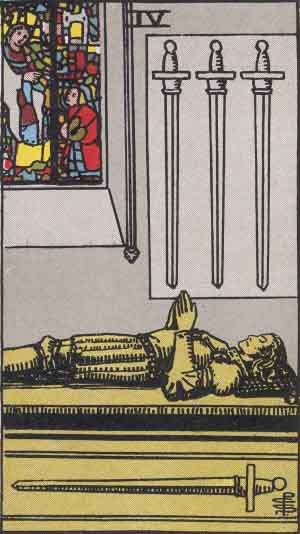 Four of Swords
Swords · Four
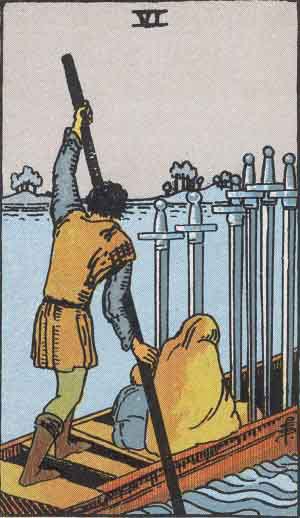 Six of Swords
Swords · Six
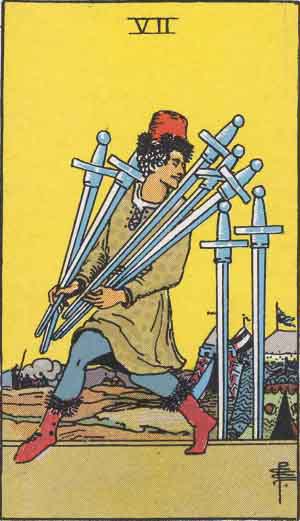 Seven of Swords
Swords · Seven
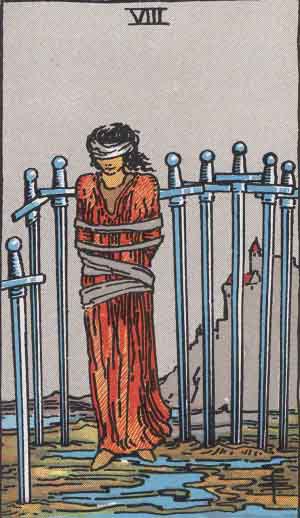 Eight of Swords
Swords · Eight
 Nine of Swords
Swords · Nine
 Ten of Swords
Swords · Ten
 Page of Swords
Swords · Page
 Knight of Swords
Swords · Knight
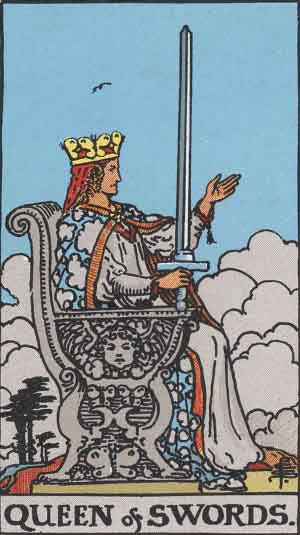 Queen of Swords
Swords · Queen
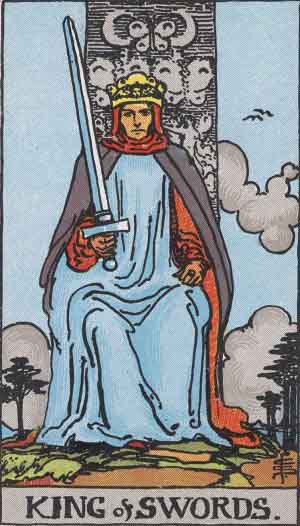 King of Swords
Swords · King
Frequently Asked Questions
What is the Five of Swords tarot card meaning?
The Five of Swords represents conflict, tension, defeat, and hollow victory. It often appears when a disagreement has become a power struggle or when winning costs more than it is worth.
Is the Five of Swords a negative card?
It deals with difficult themes, but it can also be a useful warning. It invites you to consider whether a fight is worth the price and to choose peace over pride.
What does the Five of Swords mean in love?
In love, it suggests arguments, power struggles, or pride getting in the way of connection. It encourages you to value closeness over being right.
What does the Five of Swords reversed mean?
Reversed, it suggests reconciliation, regret, or letting go of a fight. It can also mean lingering resentment or continuing a conflict out of pride.
Is the Five of Swords a yes or a no?
Usually a "no," since it points to conflict and a costly outcome. Reversed, it may lean toward yes, especially for questions about making peace.
What does the Five of Swords mean as feelings?
It suggests defensiveness, frustration, or competitiveness. The person may be hurt or on guard, and conflict may be clouding their feelings.
What does the Five of Swords mean as intentions?
It can suggest they are focused on winning or protecting themselves rather than cooperating. Reversed, it may indicate regret or a willingness to make peace.
What does the Five of Swords mean in a career reading?
It points to workplace conflict, rivalry, or a win that damages relationships. It advises picking your battles and thinking about long-term consequences.
What zodiac sign or planet is the Five of Swords?
In the Golden Dawn system, it is linked to Venus in Aquarius. Correspondences vary between traditions and decks.
What does the Five of Swords mean in the future position?
It suggests a conflict or competition ahead, and a reminder to stay calm and choose your responses with care.
What is the spiritual meaning of the Five of Swords?
It represents the ego's need to win, the cost of pride, and the wisdom of letting go of battles that do not serve you.