Page of Swords: Curiosity, Fresh Ideas, and the Courage to Ask Questions
Ideas, and the Courage to Ask Questions
The Page of Swords is the youngest court card in the Suit of Swords. It stands for curiosity, mental energy, a hunger to learn, and the eagerness to speak up. It is the student of the suit: quick, alert, and full of questions, though not yet experienced enough to handle every answer.
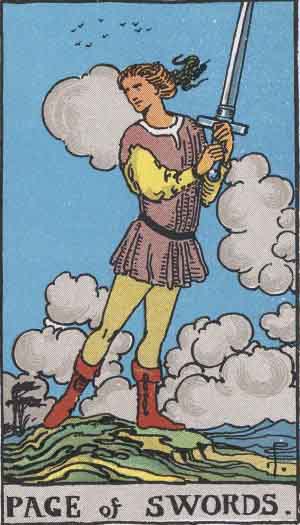
In the Rider-Waite-Smith deck, a young figure stands on a windswept hill, gripping a sword in both hands and holding it high. Clouds rush across the sky, birds fly overhead, and the trees bend in the wind. The Page looks sharp and ready but slightly off balance, as if about to move before deciding where to go.
The image captures the card's central lesson: a curious mind is powerful, but it needs direction. If you're new to tarot, our Tarot Card Meanings guide and Suit of Swords guide explain how this card fits the wider deck. As a Page, this card often points to a message, a student, or the first stirrings of a new idea.
The Page of Swords at a Glance
Page of Swords at a glance
| Detail | Meaning |
|---|---|
| Card | Page of Swords |
| Rank | Page (court card) |
| Arcana | Minor Arcana |
| Suit | Swords |
| Element | Air |
| Astrological association | Air signs (Gemini, Libra, Aquarius) in many modern traditions |
| Core themes | Curiosity, learning, new ideas, communication, vigilance |
| Upright | Curiosity, fresh ideas, honest questions, mental energy, news |
| Reversed | Gossip, sharp words, scattered thinking, haste, deceit |
The Page of Swords Tarot Card History
Swords is one of the four original suits of the 15th-century European card decks, and in Italian and Spanish decks it was drawn as real swords. Early court cards usually showed a king, a queen, a knight or cavalier, and a page or knave, each dressed to show rank.
Tarot began as a card game, and its use for divination came later, mostly in the 18th and 19th centuries. The Page of Swords as most readers know it comes from the Rider-Waite-Smith deck of 1909, devised by Arthur Edward Waite and illustrated by Pamela Colman Smith. Smith gave the court cards lively, expressive figures, and her windswept Page set the pattern for many modern versions. Some decks rename the Page as Princess, Knave, or Daughter, and the Golden Dawn tradition calls this card the Princess of Swords.
The Symbolism of the Page of Swords
The Young Figure
The Page is youthful and alert, standing with a slightly uneven stance. This shows enthusiasm and potential rather than mastery. It is someone learning how to use their mind and voice.
The Raised Sword
The sword stands for truth, intellect, and decision. Held high in both hands, it shows readiness and determination, but also inexperience. The Page has the tool, and is still learning how to use it wisely.
The Windswept Sky
The rushing clouds and wind represent the restless movement of thoughts. Air is the element of the mind, and here it is active and changeable. Ideas come fast, and the Page must learn to catch the useful ones.
The Flying Birds
The birds in the sky are often read as messages, freedom, and ideas taking flight. They support the Page's role as a messenger, bringing news or fresh thoughts.
The Bending Trees
The trees bow in the wind, showing the force of mental energy and the pressure of change. They also suggest that the Page must stay flexible rather than rigid.
The Hilltop and Rough Water
The Page stands above the water and surrounding land, gaining a wide view. This represents perspective and watchfulness. The rougher ground below hints that not everything is calm, and clear observation is needed.
The Page in Tarot
The Page is the first rank among the court cards, representing the beginning of a person's growth in that suit. Pages are students, messengers, and beginners. They can describe an actual young person, but they more often describe an attitude: openness to learning, a willingness to try, and a fresh start. In Swords, the Page is curiosity itself, the part of you that asks questions, seeks the truth, and wants to understand.
What the Upright Page of Swords Means
The upright Page of Swords is a burst of mental energy. You may be full of questions, eager to learn, or ready to share a new idea. This card often appears when you are starting to study something, gathering information, or preparing to speak honestly about a situation.
The Page of Swords can come up when you are:
- - Curious about a new subject or idea
- - Ready to ask honest questions
- - Receiving news or an important message
- - Starting a course, project, or area of study
- - Observing a situation carefully before acting
- - Speaking up for yourself or for the truth
- - Looking at an old problem with fresh eyes
The main message is that curiosity is a strength. Ask questions, gather facts, and stay alert, but remember that learning is a process. Think before you speak, and keep your words honest and kind.
How to Interpret the Page of Swords Reversed
The reversed Page of Swords shows mental energy that has lost its direction. You may be talking too much, thinking too fast, or acting before you have the facts. Honesty can turn into bluntness, and curiosity can turn into prying or gossip.
The reversed card can also mean:
- - Gossip, rumors, or careless talk
- - Sharp or hurtful words
- - Scattered thinking and lack of focus
- - Acting without a plan
- - Dishonesty or manipulation
- - Fear of speaking up
- - Being overwhelmed by information
The reversed Page asks: "Are you using your words to understand, or to wound?" Sometimes the answer is that you need to slow down. Sometimes it is that you need the courage to say what you have been holding back.
Page of Swords Keywords
Upright: Curiosity, learning, fresh ideas, honest questions, mental energy, alertness, communication, news, vigilance, eagerness.
Reversed Keywords
- Gossip
- Sharp words
- Scattered thoughts
- Haste
- Deceit
- Cynicism
- Poor planning
- Information overload
- Fear of speaking up
The Page of Swords Romance and Love
In love readings, the Page of Swords represents curiosity, lively conversation, and the early stages of getting to know someone. If you're single, it can mean you are meeting someone through words, such as messaging, shared interests, or witty banter. It may also show that you are learning what you want from love and asking yourself honest questions.
In a relationship, the Page can signal a need for open communication and fresh ideas. It may also show playful, mentally stimulating interaction. The card values honesty and curiosity, but it can feel more intellectual than romantic at first.
Love and the Reversed Page of Swords
Reversed in love, the Page of Swords can point to gossip, mixed messages, or careless words that cause hurt. It may suggest someone is playing games, avoiding real conversation, or speaking too sharply. Slow down, listen carefully, and say only what you mean.
Feelings of the Page of Swords
As someone's feelings, the Page of Swords can mean they are curious about you and interested in getting to know you better. They may be thinking a lot about the connection and trying to understand it. Their feelings may still be new or undefined, and they may express them through conversation rather than gestures.
Intentions: The Page of Swords
As intentions, the Page of Swords suggests the person is curious and wants to learn more, but they may not yet know what they want. Their interest can be genuine, though it may be light or exploratory. If reversed, the card warns of insincerity, mixed signals, or someone who talks more than they act.
Page of Swords: Work & Career
The Page of Swords is an energetic card for career questions. It may point to:
- - A new job, course, or learning opportunity
- - An entry-level role or internship
- - A message, email, or offer arriving
- - Fresh ideas and a willingness to research
- - A talent for writing, analysis, or communication
- - Legal, technical, or administrative matters
- - Speaking up in meetings or asking smart questions
The card encourages you to stay curious and keep learning. Do your research, prepare carefully, and share your ideas with confidence.
The Page of Swords in Careers (Reversed)
Reversed, the Page suggests miscommunication, office gossip, or rushing into a decision without enough information. You may feel scattered or unsure of your direction. It can also warn against sharp criticism or careless emails. Check your facts, think before you speak, and keep your focus.
The Page of Swords and Wealth
In financial readings, the Page of Swords encourages learning and careful observation. It can point to researching your options, reading the fine print, or studying how money works. It may also signal news about money, such as a document, statement, or message.
Reversed, it can suggest:
- - Impulsive spending or investing
- - Acting on rumors or incomplete information
- - Missing important details
- - Confusion about finances
- - Careless contracts or paperwork
In money readings, the Page of Swords says to ask questions, gather facts, and avoid rushing.
Page of Swords: Yes or No
The Page of Swords is often a yes for yes-or-no questions, especially if the question is about:
- - Learning something new
- - Getting information or news
- - Starting a study or a project
- - Speaking up honestly
- - Exploring a fresh idea
The yes comes with a condition: do your homework first. Reversed, the answer may be "not yet" or "no," especially if you are acting in haste or without all the facts.
The Page of Swords Guidance
When the Page of Swords is your advice card, the message is simple: stay curious. Ask questions, gather information, and keep an open mind. Listen as much as you speak, and don't be afraid to say you don't know yet.
Be honest, but choose your words carefully. The card encourages a quick and alert mind, but it also reminds you that wisdom comes with practice. A sharp mind is at its best when it is paired with patience.
The Page of Swords in Different Spread Positions
Page of Swords in the Past
A message, idea, or period of learning shaped where you are now. You may have asked questions or spoken up in a way that changed your path.
Page of Swords in the Present
You are in a curious, alert phase. Pay attention to new information, conversations, and ideas, and take time to understand before acting.
Page of Swords in the Future
News, a new idea, or a chance to learn is on its way. You may soon have questions answered or be asked to speak up.
The Challenge of the Page of Swords
The challenge may be controlling a restless mind, speaking too quickly, or acting before you have the facts. You may also need the courage to ask a question you've been avoiding.
Outcome: The Page of Swords
This usually points to learning, new understanding, or a message that opens a new chapter. The outcome comes through curiosity and honest communication.
Page of Swords Meaning and Element
The Page of Swords is associated with Air, the element of thought, communication, and perception. Air is quick and changeable, which suits a card of restless curiosity. In the Golden Dawn system, the Princess of Swords is tied to the earthy part of Air, a pairing that blends ideas with practical grounding. Tarot correspondences vary by tradition and deck, so treat the element as a suggestion rather than a rule.
The Meaning of the Page of Swords on a Deeper Spiritual Level
Spiritually, the Page of Swords is about the beginner's mind: the willingness to question, observe, and learn without assuming you already know. It marks the stage where you start examining your beliefs and asking what is really true.
The card also teaches that curiosity is a spiritual practice. When you ask honest questions and listen to the answers, your understanding grows. The Page invites you to approach life with openness, courage, and a readiness to be surprised.
Tarot Card: Page of Swords
When the Page of Swords shows up, ask yourself:
- - What am I curious about right now?
- - What question have I been afraid to ask?
- - Do I have all the facts before I decide?
- - Am I using my words to understand or to wound?
- - What new idea is asking for my attention?
The Page is especially powerful alongside cards of communication and learning. Always read it in relation to your question and the surrounding cards.
The Page of Swords and Other Cards
- Page of Swords and The Magician: A bright idea turned into action
- Page of Swords and The Fool: Curiosity leading to a bold new start
- Page of Swords and Ace of Swords: A fresh idea backed by clear truth
- Page of Swords and Two of Swords: A question that needs an honest answer
- Page of Swords and The Moon: Information that is unclear or incomplete
Page of Swords Tarot Card Keywords
Upright: Curiosity, learning, fresh ideas, honest questions, mental energy, alertness, communication, news, vigilance, eagerness.
Reversed: Gossip, sharp words, scattered thoughts, haste, deceit, cynicism, poor planning, information overload, fear of speaking up.
The Page of Swords Tarot Card Meaning: What to Take Away
The Page of Swords is the card of curiosity, fresh ideas, and honest questions. It reminds you that a willing mind is a powerful one, and that learning begins with the courage to ask.
When the Page shows up, ask yourself what you want to understand, what you are ready to say, and what you still need to learn. Stay curious, stay honest, and think before you speak.
See what the Page of Swords means in your own spread with a free online tarot reading, or learn more on our Suit of Swords page.
Explore the Other Swords Cards
Each card in the Suit of Swords marks its own stage, from the Ace to the King.
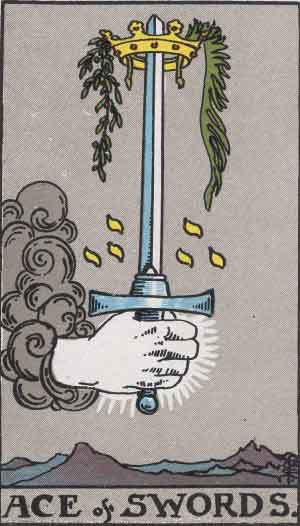 Ace of Swords
Swords · Ace
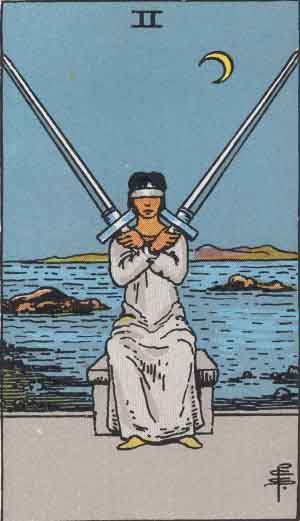 Two of Swords
Swords · Two
 Three of Swords
Swords · Three
 Four of Swords
Swords · Four
 Five of Swords
Swords · Five
 Six of Swords
Swords · Six
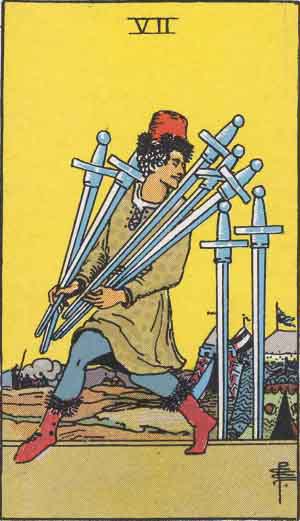 Seven of Swords
Swords · Seven
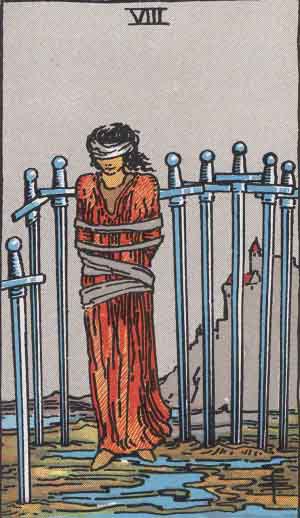 Eight of Swords
Swords · Eight
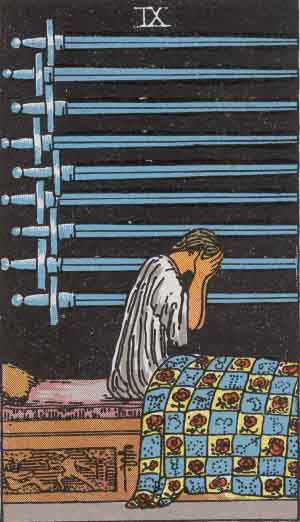 Nine of Swords
Swords · Nine
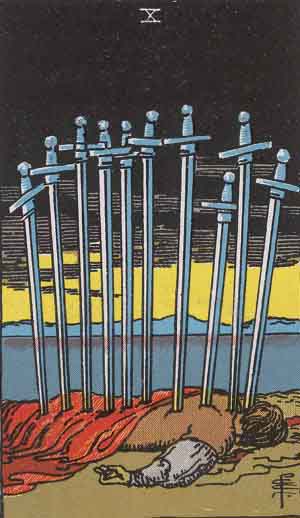 Ten of Swords
Swords · Ten
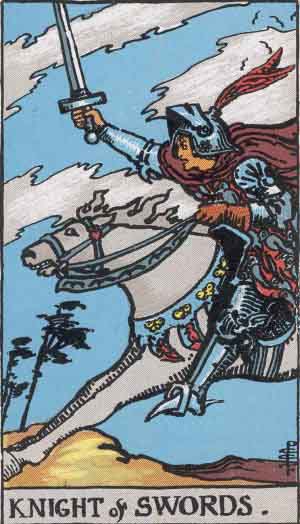 Knight of Swords
Swords · Knight
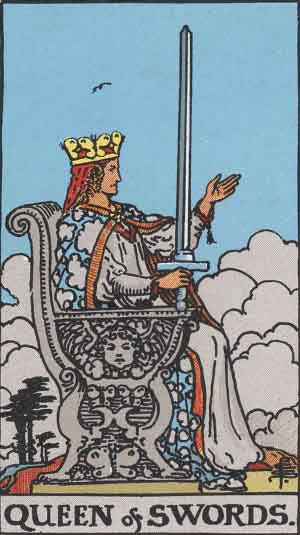 Queen of Swords
Swords · Queen
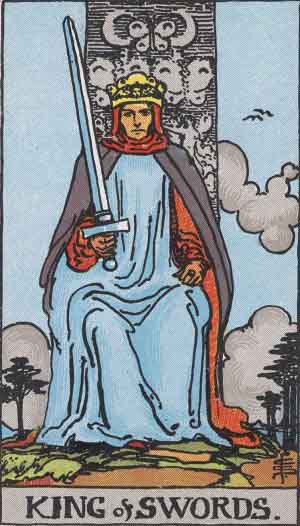 King of Swords
Swords · King
Frequently Asked Questions
Is the Page of Swords a good card?
Generally yes. It brings energy, curiosity, and new ideas. It also reminds you to use words carefully, since a sword cuts both ways.
What does the Page of Swords mean in love?
In love, it means curiosity, lively conversation, and getting to know someone through words. It values honesty and open communication.
What does the Page of Swords reversed mean?
Reversed, it signals gossip, sharp words, scattered thinking, or acting in haste. It can also point to deceit or fear of speaking up.
Page of Swords Yes/No?
Usually yes, especially for questions about learning, news, and new ideas. Reversed, it can mean "not yet" or "no."
Page of Swords meaning as feelings
It can show that someone is curious about you and thinking a great deal about the connection. Their feelings may still be developing.
What does the Page of Swords mean as intentions?
It suggests the person is curious and exploring, though their intentions may not yet be settled. Reversed, they may be insincere or send mixed signals.
What does the Page of Swords mean in career readings?
It points to learning opportunities, new ideas, messages, and entry-level roles. It encourages research, preparation, and speaking up.
What is the element of the Page of Swords?
Air, the element of thought, communication, and perception.
What does the Page of Swords mean in the future position?
News, a new idea, or a chance to learn is coming. You may soon get answers to questions you've been asking.
What does the Page of Swords symbolize spiritually?
It stands for the beginner's mind: questioning your beliefs, staying open to learning, and approaching life with honest curiosity.